Pasta Primavera – A Fresh, Simple Vegetable Pasta
Pasta primavera is a simple, nourishing vegetable pasta, and it’s how I’m choosing to start the year — with real food, cooked from scratch. It’s taken me nearly six decades to realise that caring for myself well through food is essential if I want to have the energy and capacity to care for others.
When I look at the people in my life who’ve lived long, healthy lives — including my grandmothers and great-grandmothers — one thing stands out. They ate a varied diet, cooked from scratch, enjoyed plenty of fruit and vegetables, ate very little in the way of preservatives or processed foods, and didn’t fear butter, carbs, or dessert.
If you enjoy simple, nourishing meals like this, you might also like my Hearty Vegetable Soup with Basil Pistou. It’s another recipe cooked from scratch, packed with vegetables and full of flavour, and one I often turn to when I feel I need a big dose of nutrients.
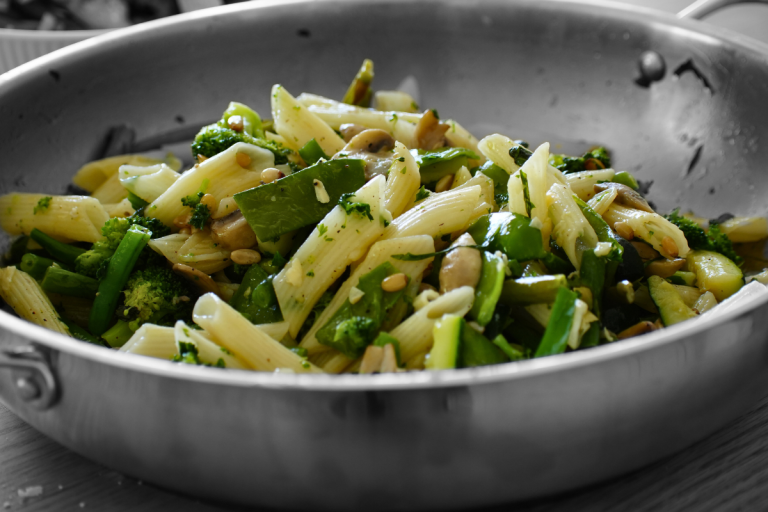
Pasta Primavera – A Fresh, Simple Vegetable Pasta
Ingredients
Vegetables
- 200 g broccoli florets (keep the stems for another dish)
- 200 g green beans trimmed and cut into thirds
- 130 g asparagus woody ends removed, cut into pieces
- 150 g snow peas strings removed, sliced diagonally or left whole
- 200 g zucchini cut into batons
- 200 g button mushrooms thinly sliced
Pasta & Sauce
- 250-400 g penne pasta or pasta of choice
- 70-80 g unsalted butter
- 70-80 ml olive oil (about ⅓ cup)
- 2-3 cloves garlic finely chopped
- 1-2 tbsp pine nuts (they’re strongly flavoured)
Herbs & Seasoning
- Small handful fresh basil, finely sliced or 1 tsp dried basil
- Small handful fresh parsley roughly chopped
- Freshly ground black pepper to taste
- Salt to taste
- Pinch freshly grated nutmeg
To Serve
- Finely grated Parmesan or Pecorino cheese
Instructions
Prepare the vegetables
- Wash and prepare all vegetables before cooking. Cut everything into bite-sized pieces so it cooks evenly. Keep vegetables separate.
Bring water to the boil
- Bring a large pot of water to the boil and add 2 generous tablespoons of salt. This will season the vegetables and pasta.
Blanch the vegetables
- Blanch the vegetables one at a time in the boiling water (except the mushrooms). Once the water returns to the boil, blanch each vegetable for about 30 seconds.
- Remove each batch with a sieve or a slotted spoon and spread on a tray to cool and dry.
Cook the pasta
- Top the pot back up with water if needed and bring back to the boil. Add the pasta and cook until just al dente.
Make the sauce
- While the pasta cooks, place a large heavy-based pan over moderate heat.
- Into the cold pan, add the butter and olive oil, then add the garlic straight away so it gently cooks as the fats heat.
Cook the mushrooms
- When the butter is foaming, add the mushrooms and cook for 2-3 minutes until slightly softened.
Add vegetables and seasoning
- Add all the blanched vegetables to the pan. Toss gently to coat in the butter and oil.
- Season generously with black pepper, add pine nuts, basil, parsley, and a small pinch of nutmeg. Taste and add a little salt if needed.
Combine with pasta
- Using tongs or a slotted spoon, transfer the pasta directly from the pot into the pan so a little pasta water comes with it. Toss gently to combine.
Serve
- Remove from heat and serve immediately with plenty of grated Parmesan or Pecorino, and extra salt and pepper at the table.
Video
Notes
- Use any seasonal vegetables you enjoy — this recipe is very adaptable.
- Cooking the vegetables briefly in the pasta water preserves colour, nutrients, and flavour.
- Transferring the pasta straight into the pan helps the sauce cling beautifully.
- Works very well with gluten-free pasta.
- Leftovers keep well and are perfect for lunch the next day.
- If you don’t enjoy the flavour of extra virgin olive oil, use light olive oil instead.