
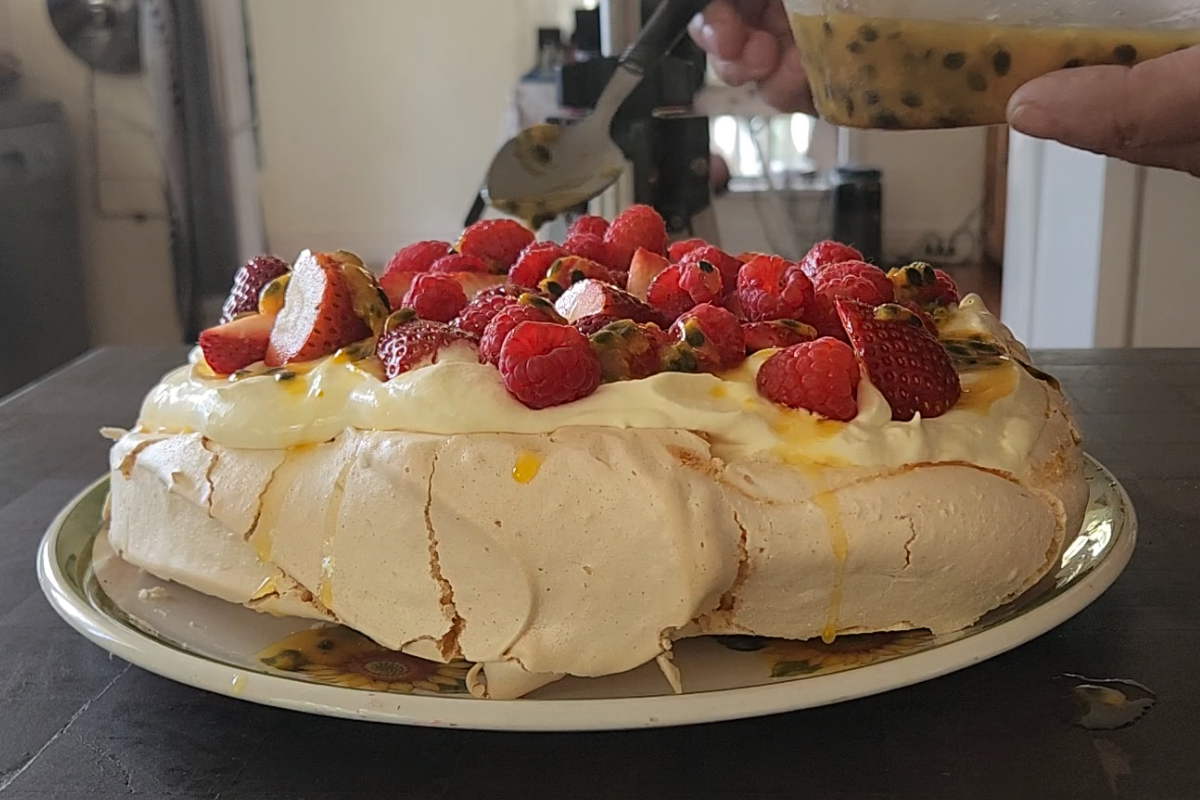
Super Easy, No Fail, Australian Pavlova Recipe
This Super Easy Australian Pavlova recipe is a show-stopping dessert that’s crisp on the outside, soft and marshmallowy on the inside, and surprisingly simple to make. With just a handful of everyday ingredients, you’ll create a pavlova that’s sure to impress! Best of all, it’s naturally gluten-free — just like my rich and decadent Chocolate Flourless Cake if you’re looking for another beautiful gluten-free dessert idea.
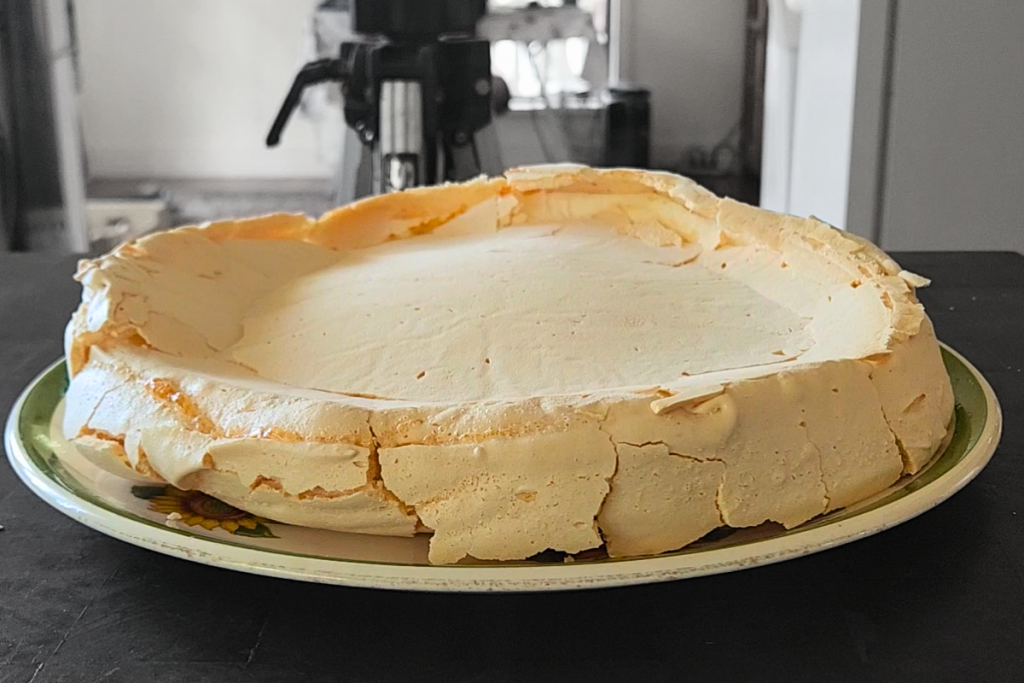
Before decorating, this is what the pavlova should look like: Don’t worry if your pavlova sinks in the middle — that’s exactly what should happen. I place it onto a hot plate and turn it upside down, which helps create the perfect hollow, ready to be filled with cream and fruit.
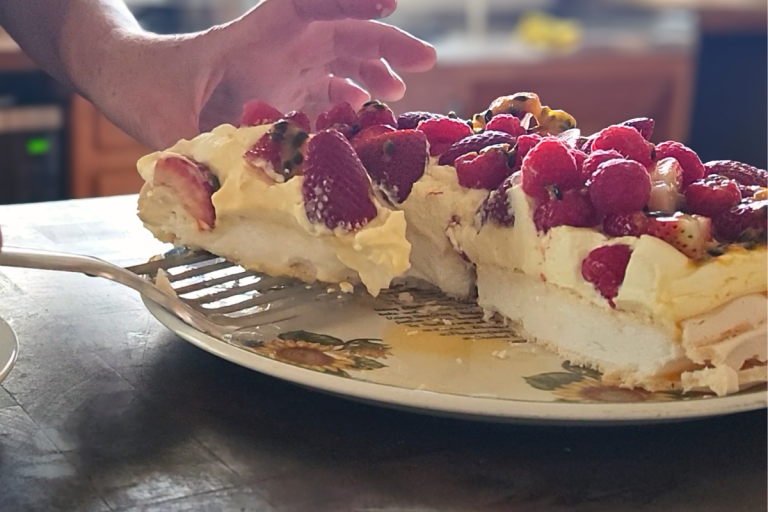
Super Easy Pavlova Recipe
Prep Time: 15 minutes
Cook Time: 1 hour
Servings: 10 servings
This easy pavlova recipe comes from the wonderful CWA (Country Women’s Association) in Australia, known for their fabulous baking skills. In their cookbook, it’s simply called the "No-Fail Pavlova" — and it truly lives up to the name. It’s the easiest pavlova I know how to make, with no need to add the sugar gradually — it all goes in at once! Just beat the mixture until it’s thick, glossy and holds its shape, then pile it onto a foil-lined tray or pavlova plate, ready to bake into a crisp, marshmallowy dessert everyone loves.
Ingredients
- 4 egg whites at room temperature
- 1 tablespoon cornflour cornstarch
- 1½ cups 360g – caster sugar superfine
- Pinch salt
- 5 tablespoons boiling water
- 1 teaspoon white vinegar
- 1 teaspoon vanilla essence
- 600 ml cream
- Fresh fruit e.g., passionfruit, sliced bananas, strawberries, kiwi fruit, pineapple for decoration
Instructions
- Preheat oven to 200°C (400°F) fan forced. Line a tray with aluminium foil and spray the foil lightly with cooking spray.
- Place egg whites into a large bowl and bring to room temperature.
- In a separate bowl, mix cornflour and sugar together.
- Add sugar mixture to egg whites, along with salt and boiling water all at once.
- Beat on high speed until sugar dissolves and mixture holds its shape a little, then pause beating to add vinegar and vanilla essence. Continue beating until the mixture is stiff and stiff peaks form.
- Pile the mixture onto the prepared tray, shaping it into the size of a sponge cake.
- Immediately reduce oven temperature to 145°C (300°F) and bake for about 1 hour.
- About 5 minutes before the pavlova finishes baking, place your serving plate in the sink and pour boiling water over it. Let it sit for a couple of minutes, then dry it well. A hot plate helps the pavlova sink slightly in the middle when inverted, making the perfect space for cream and fruit.
- Once baked, carefully flip the pavlova onto the warm plate and gently remove the foil.
- Let the pavlova cool completely (it will sink in the middle). and may crack, but that is completely normal.
- Whip cream until soft peaks form. No need to add icing sugar, the pavlova is sweet enough.
- Spoon whipped cream onto the pavlova and decorate with fresh fruit.
Video
Notes
- The pavlova may crack slightly when turned onto the plate — this is completely normal. It creates the perfect hollow to hold the cream and fruit.
- To warm the serving plate, place it in the sink and pour boiling water over it. Leave it for a few minutes, then dry it just before the pavlova comes out of the oven.
- Use passionfruit, sliced bananas, strawberries, or any seasonal fruit for topping. Another old-fashioned Australian topping is grated chocolate.
- Store undecorated pavlova wrapped in cling film at room temperature for 1–2 days. Once decorated, store leftovers in the fridge.
- Lightly spraying the foil-lined tray with cooking spray helps prevent the pavlova from sticking when you invert it.


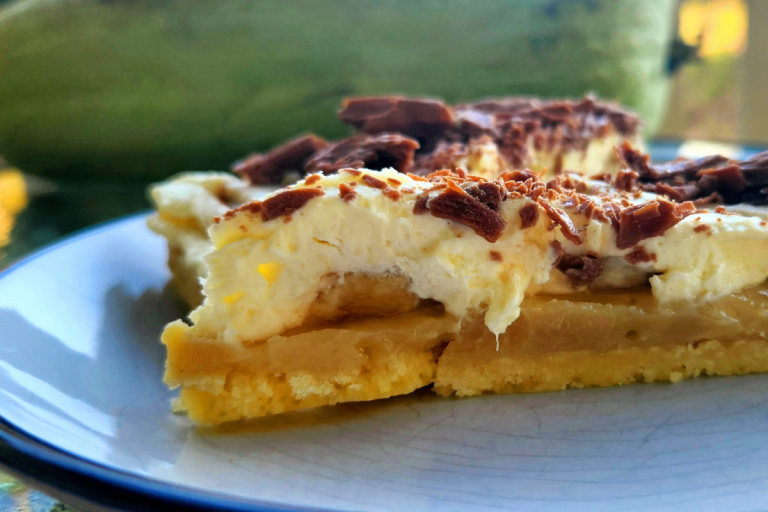
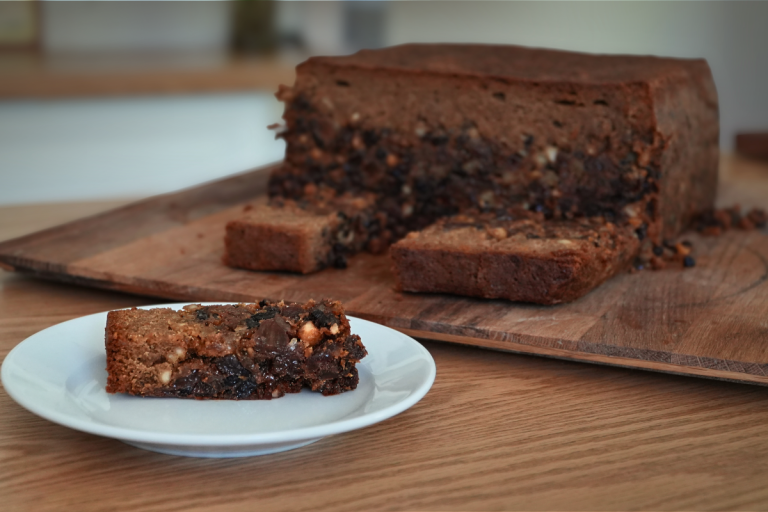

It worked out perfectly for me, thanks Lee! The only things i did differently were reducing the sugar to 220g & baked the pavlova directly on a lightly oiled oven proof serving plate, because i am too nervous to flip it over.
Hahaha, I know what you mean about turning it upside down. ☺ I’m so glad it turned out lovely for you. I’m going to try reducing the sugar like you did next time, I’ve never tried that. Thank you so much for taking the time to leave a review, I really appreciate it. ❤
good recipe
Oh so glad you think so, I’ve made this so many times, I really like the crust to marshmallow ratio. 🙂