French Scone
Prep Time: 15 minutes
Cook Time: 30 minutes
Servings: 8 pieces
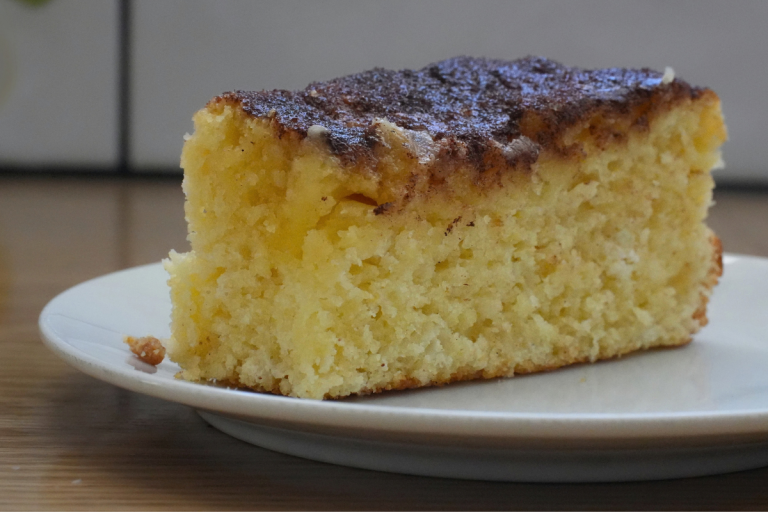
This unusual French Scone starts with a meringue, giving it a beautifully light, soft and tender texture. It’s baked in one tin, then finished while still warm with melted butter and cinnamon sugar. Serve it in generous slices with plenty of butter. It also works beautifully with gluten free flour.
Ingredients
French Scone
- 2 large eggs, at room temperature, separated
- small pinch salt
- 1 cup caster sugar (220 g)
- 1 cup whole milk (250 ml)
- 1 teaspoon vanilla extract (5 ml)
- 2 cups self raising flour, sifted (300 g)
- 2 tablespoons butter, melted and cooled (40 g)
Cinnamon Sugar Topping
- 2 tablespoons butter, melted (40 g)
- 2 teaspoons sugar
- 1 teaspoon ground cinnamon
Instructions
Prepare the Oven and Tin
- Preheat the oven to 180°C (350°F) conventional or 160°C fan forced. Grease and line a 23 cm (9 inch) square cake tin, or a similar sized 2 litre (8 cup) capacity tin, with baking paper, leaving enough overhang to lift the scone out once baked.
Make the Meringue
- Separate the eggs, placing the egg whites into a clean, dry glass, ceramic or stainless steel bowl. Set the yolks aside.
- Add a small pinch of salt and beat the egg whites with an electric mixer until stiff peaks form.
- Gradually add the caster sugar, a little at a time, beating continuously until the meringue is thick and glossy and holds its shape. This can take 3–5 minutes. The mixture will still feel slightly grainy, and that is fine.
Make the Scone Mixture
- Lightly beat the reserved egg yolks. (This makes them easier to fold in).
- Gently fold the egg yolks, milk and vanilla into the meringue.
- Add the sifted self raising flour and gently fold until just combined. Don't worry if the mixture is lumpy.
- Finally, gently fold through the melted and cooled butter.
Bake
- Pour the mixture into the prepared tin and gently spread it evenly.
- Bake on the middle shelf for 25–35 minutes, or until cooked through. Check at 25 minutes and continue baking as needed. Avoid overbaking, as the scone is best when it remains soft and tender.
Make the Cinnamon Sugar Topping
- While the scone is baking, combine the sugar and cinnamon in a small bowl. Melt the additional butter and set aside.
Finish the Scone
- Once the scone has finished baking, whilst it is still warm and in the tin, pour or brush the melted butter over the top, then sprinkle evenly with the cinnamon sugar.
- Transfer to a wire rack and allow to cool for about 10 minutes before slicing.
Serve
- Serve warm or at room temperature, preferably with plenty of butter.
Video
Notes
If self raising flour isn’t available: Replace it with 2 cups (300 g) plain flour, 10 g cream of tartar and 4 g bicarbonate of soda. In spoon measures, that’s approximately 2½ teaspoons cream of tartar and ¾ teaspoon bicarbonate of soda. Sift together 2 or 3 times to distribute the raising agents evenly before using. Alternatively, use 2 cups (300 g) plain flour with 2 heaped teaspoons baking powder. As baking powder can vary in strength between brands and countries, I now recommend 2 heaped teaspoons rather than the 4 teaspoons I previously suggested. Gluten free: This recipe works very well using a good gluten free self raising flour in place of regular self raising flour at a 1:1 ratio. The gluten free version may sink slightly in the centre as it cools, but this doesn't affect the flavour or lovely tender texture. Alternative mixing method: A viewer shared an interesting alternative method from her father, who was a cook and pastry chef. Instead of adding the flour and milk to the meringue, mix the flour with the egg yolks, milk and vanilla first. Make the meringue separately, then gently fold it through the mixture a little at a time, taking care not to knock out too much of the air. She also suggested that when using this method, plain flour could be used instead of self raising flour, as the whipped egg whites provide the aeration. I haven’t tested this method or the plain flour variation myself, but I thought it was an interesting technique worth sharing. I plan to test it soon and will update this note with the results. Storage: This French Scone stays fresh for up to 3 days when kept well covered at room temperature. Meringue: Make sure the bowl and beaters are completely clean and dry. Room temperature egg whites also whip more readily. Australian measurements: This recipe uses Australian cups and tablespoons. One Australian cup is 250 ml and one Australian tablespoon is 20 ml.